Best Zero Balance Savings Accounts in India 2026: Complete Guide for Private & Government Banks
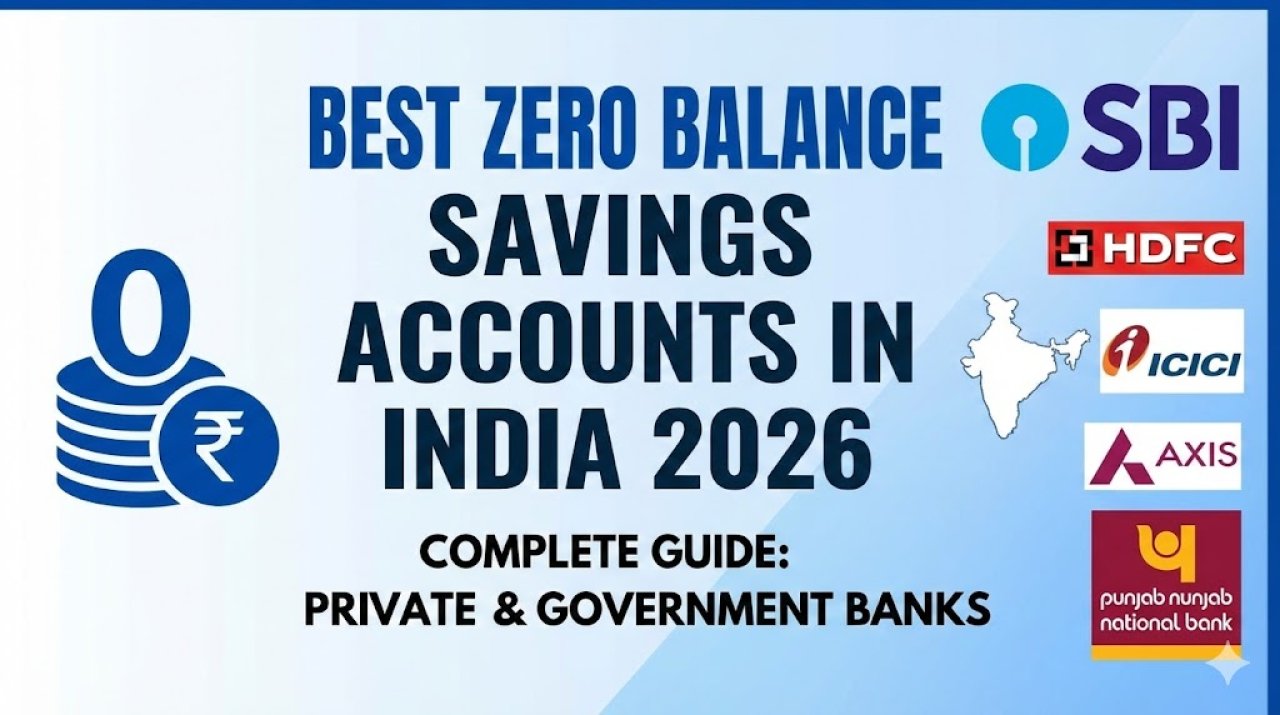
Today we'll discuss the best banks for opening zero balance savings accounts in India. Many people don't understand what zero balance savings accounts really mean, and they end up paying unnecessary penalties. In this comprehensive guide, I'll analyze all major private and government banks to help you choose the right account based on your financial needs.
What is a Zero Balance Savings Account?
A zero balance savings account means you don't need to maintain any minimum balance in your account. Unlike regular savings accounts where banks require you to maintain monthly average balances of ₹5,000, ₹10,000, or even ₹15,000, zero balance accounts impose no such requirement. If your account balance becomes zero due to insufficient funds or any reason, the bank won't charge you any penalty. This gives you peace of mind knowing that your small savings won't be deducted as penalties.
Private Banks Analysis
HDFC Bank
HDFC Bank doesn't offer any zero balance savings account. Their premium savings account - the Regular Savings Account - requires maintaining a minimum balance of ₹10,000 monthly. While HDFC Bank is excellent for business accounts and high-net-worth individuals, it's not suitable if you want a zero balance account. Their approach is clearly aimed at customers who can maintain significant balances.
Axis Bank
Axis Bank's Easy Axis Savings Account requires maintaining ₹12,000 monthly average balance. While they do offer a zero balance savings account called "Amaz Savings Account," it comes with a monthly maintenance fee of ₹200 (₹2,400 annually). This defeats the purpose of having a zero balance account since you're paying fees regardless of your balance. The regular Easy Axis Account is decent but requires too high a minimum balance.
ICICI Bank
ICICI Bank has increased its monthly average balance requirements to ₹15,000 for metro cities, ₹7,500 for semi-urban areas, and ₹2,500 for rural areas. They also require an initial funding of ₹1 lakh when opening accounts in major branches. ICICI's approach is clear - they target high-value customers only. If you earn well and can maintain these balances, ICICI offers excellent services. But for those with limited income, it's not recommended.
AU Small Finance Bank
AU Small Finance Bank offers completely zero balance savings accounts through their "AU Digital Savings Account." However, there's a catch - they require initial funding of either ₹5,000 or ₹10,000 when you open the account online. After this one-time funding, you can maintain zero balance without any penalties. The challenge with AU Small Finance Bank is that as a small finance bank, some customers have trust issues despite RBI insurance coverage.
Indusind Bank
Indusind Bank offers the "Indus Delite" account which is a zero balance savings account. However, it requires an initial funding of ₹5,000 when opening the account. Another significant drawback is the address verification issue. If your Aadhaar card address differs from your current location, you may need to visit your home branch for KYC completion. This could trap your initial funding if you're working in a different city.
Kotak Mahindra Bank
Kotak Mahindra Bank is the best option for zero balance savings accounts among private banks. They offer two accounts: Kotak 811 Classic Account (₹2,000 initial funding) and Kotak 811 Super Savings Account (₹10,000 initial funding). Both are zero balance accounts. The Super Account offers 5% cashback on debit card transactions up to ₹500 monthly (₹6,000 annually). While the higher initial funding might seem steep, the cashback benefits can offset the costs over time.
Government Banks Analysis
Bank of Baroda
Bank of Baroda doesn't offer zero balance savings accounts. Their "Light Savings Account" requires maintaining ₹3,000 monthly average balance. While their mobile banking app is decent, it's not as good as SBI's. Considering the minimum balance requirement, Bank of Baroda isn't a suitable option for zero balance needs.
State Bank of India (SBI)
SBI's "Insta Plus Savings Account" is the best government option. It has zero balance facility and minimal fees. The debit card costs ₹236 annually (₹200 + 18% GST from second year). Most importantly, SBI offers three free cash transactions monthly (deposit or withdrawal). Any additional transaction costs only ₹59, regardless of amount. This makes SBI ideal for those with regular cash transactions.
Bank Comparison: Private vs Government
Cash Transaction Comparison
Private Banks: First transaction free, then ₹5 per ₹1,000. Depositing ₹1 lakh costs ₹5,000. Even withdrawing ₹1 crore costs ₹50,000.
SBI: Three transactions free monthly. Fourth transaction costs only ₹59, whether it's ₹1 or ₹1 crore.
Who Should Choose Which Bank?
Choose Private Bank (Kotak Mahindra) if:
- You have a good income (₹25,000+)
- You want excellent online banking
- You have minimal cash transactions
- You want cashback and premium features
Choose Government Bank (SBI) if:
- Your income is less (under ₹15,000)
- You have frequent cash transactions
- You prefer trusted government institutions
- You want minimal charges and fees
Final Recommendations
For zero balance savings accounts:
- Best Overall: Kotak Mahindra Bank (Super Savings Account)
- Best Government Option: SBI (Insta Plus Savings Account)
- Good Alternative: AU Small Finance Bank
Your choice should depend on your income level, cash transaction frequency, and specific banking needs. Start with the bank that best matches your current financial situation.
Important Things to Remember
Account Opening Process
Each bank has a different account opening process requiring branch visits for document verification. Initial funding amounts vary between banks. Some banks may require additional documentation based on your location and current address.
Documents Required
Typically, you'll need: Aadhaar card, PAN card, address proof, and passport-sized photos. Video verification may be required for KYC completion. Some banks might ask for additional documents based on their internal policies.
Mobile Banking Experience
Private banks generally offer superior mobile banking applications compared to government banks. While SBI's app has improved significantly, private banks still lead in user experience, features, and functionality.