From Chatbots to Colleagues: Mastering the Agentic AI Shift in 2026
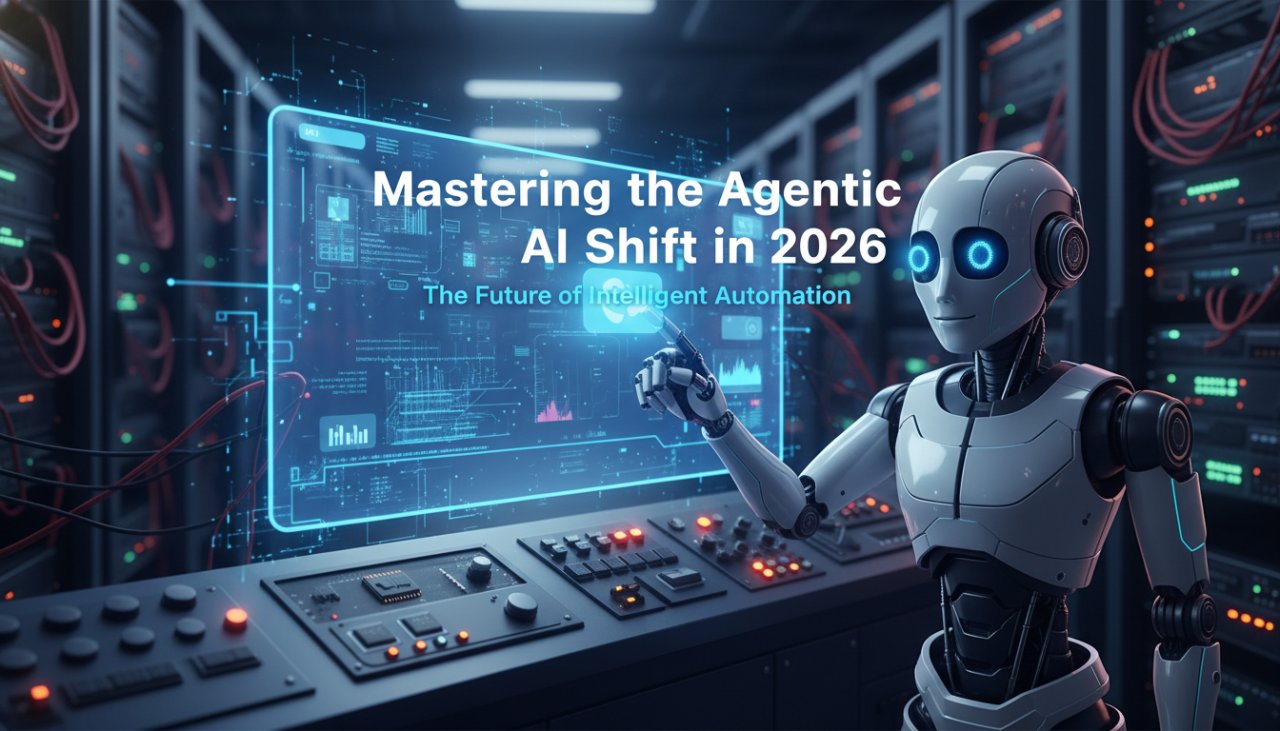
In the early days of AI, we poked at chatbots like curious kids tapping a fish tank. You'd ask ChatGPT a question, get a witty reply, and call it a day. Fast-forward to 2026, and AI has undergone its "agentic" revolution. These aren't just talkers anymore—they're doers. AI agents plan, execute, adapt, and deliver results, turning your digital life from reactive chit-chat to proactive partnership. Think of them as tireless colleagues who never need coffee breaks.
This shift isn't hype; it's happening now. Gartner predicts that by 2027, 40% of enterprises will use AI agents for core workflows, up from single digits in 2024. But here's the catch: while agentic AI promises to supercharge productivity, early adopters are stumbling. Surveys from McKinsey show 40% of AI projects fizzling out—not from tech flaws, but from poor strategy. Meanwhile, debates rage over on-device AI (running locally on your phone) versus cloud AI (server-powered beasts). Privacy hawks love the former; power users crave the latter.
In this post, we'll demystify the agentic shift. You'll learn how to "hire" your first AI agent, diagnose why so many agentic workflows flop (and fix yours), and pick the right AI flavor for your needs. By the end, you'll be ready to onboard your first digital colleague. Let's dive in.
What Makes AI "Agentic"? The Evolution Explained
Agentic AI flips the script on traditional models. Chatbots like the original GPTs respond to prompts—they're reactive, one-shot wonders. Agents, however, are proactive systems that break tasks into steps, use tools (like APIs or browsers), reason through obstacles, and iterate until done. Powered by models like Grok 4.1, Claude 3.5, or open-source gems like Llama 3.2, they handle multi-step workflows autonomously.
Picture this: Instead of manually searching flights, booking hotels, and emailing itineraries, you tell an agent, "Plan a budget weekend in Goa for two, under ₹20,000, with beach time." It scouts options, compares prices, books via APIs, and emails confirmations—all while you sip chai.
Key traits of agentic AI:
-
Planning: Decomposes goals into subtasks (e.g., research → decide → execute).
-
Tool Use: Integrates with calendars, emails, code editors, or even your smart home.
-
Memory & Adaptation: Remembers past actions, learns from failures, and self-corrects.
-
Autonomy: Runs in loops until success, with human oversight as needed.
In 2026, platforms like Anthropic's Claude Agents, xAI's Grok Agents, and no-code builders like Zapier Central or Replicate make this accessible. No PhD required—just a clear goal.
Hiring Your First AI Agent: A Step-by-Step Guide
Ready to onboard your digital sidekick? Treat it like hiring a junior colleague: define the role, interview candidates, and set expectations. Here's how to "hire" in under 30 minutes.
Step 1: Define the Job Description
Start small. What repetitive task drains you? Email triage? Content research? Code debugging? Write a crisp spec: "Scan my inbox daily, flag high-priority sales leads, draft replies, and schedule follow-ups."
Step 2: Pick Your Agent Platform
-
Beginner-Friendly: Use Grok's agent builder (free tier via xAI app) or Perplexity's Agents for quick setups.
-
Power Users: Cursor or Devin for coding agents; MultiOn for browser-based tasks.
-
Enterprise: LangChain or AutoGen for custom stacks.
Pro tip: Test with a free trial. Most offer 100-500 actions/month gratis.
Step 3: Onboard and Train
Upload context: Paste your work style, key contacts, or style guides. Prompt like this: "You're my sales assistant. Prioritize leads from Mumbai startups. Use Gmail API for sends. Confirm big actions with me."
Hit deploy. Your agent now lives in the background, humming along.
Step 4: Monitor and Iterate
Check logs daily at first. Did it book the wrong flight? Tweak: "Always verify prices on MakeMyTrip first." Agents learn fast—expect 80% autonomy in week one.
Real-world win: A Mumbai freelancer I know "hired" a content agent via Flowise. It now researches topics, outlines posts, and even generates SEO-optimized drafts, saving 10 hours weekly. Cost? ₹500/month.
Common pitfalls? Vague prompts lead to hallucinated actions. Fix: Use chain-of-thought prompting ("Think step-by-step before acting").
Why 40% of Agentic Workflows Fail (And How to Fix Yours)
The agentic buzz is real, but so are the busts. That 40% failure rate from recent Forrester data? It's not the AI—it's us humans. Projects tank from scope creep, brittle integrations, or "prompt jail" where agents loop endlessly.
Top Failure Modes
-
Overambition: Starting with "Automate my entire business" instead of "Automate invoicing."
-
Tool Gaps: Agents flail without APIs (e.g., no access to your CRM).
-
No Guardrails: Unchecked agents spam emails or leak data.
-
Evaluation Blindness: No metrics, so you don't spot drift.
Your Fix-It Playbook
-
Scope Ruthlessly: Pilot one workflow. Measure ROI with time saved or tasks completed.
-
Build Robust Tools: Use secure APIs (OAuth for Gmail, Stripe for payments). Test edge cases.
-
Add Humans-in-the-Loop: Pause for approvals on spends over ₹1,000.
-
Monitor with Dashboards: Tools like LangSmith track agent "thoughts" and costs.
-
Iterate Weekly: Review failures. Agents improve via fine-tuning on your data.
Case study: A Delhi marketing firm launched an agentic campaign optimizer. It bombed initially—hallucinated ad copy led to ₹50k wasted spend. Fix: Added a "human veto" step and A/B testing integration. Now, it boosts conversions 25%.
Success metric: Aim for 90% task completion rate. If below, debug prompts first.
On-Device AI vs. Cloud AI: Privacy, Power, and the Right Choice for You
Agentic AI thrives on compute, sparking the on-device vs. cloud war. On-device runs locally (e.g., Apple's Intelligence or Qualcomm's Snapdragon agents), keeping data off servers. Cloud (AWS Bedrock, Google Vertex) taps massive GPUs for complex tasks.
Hybrid Hack: Use on-device for intake (e.g., voice commands) and cloud for heavy lifting. Tools like Ollama let you run Llama agents locally, syncing to cloud as needed.
Privacy pick for Indians? On-device wins amid rising data laws (DPDP Act 2023). But for business scale, cloud's raw power dominates—40% of agentic projects use it, per IDC.
The Future: Agents as Your Ultimate Colleagues
By 2027, expect "agent swarms"—teams of specialized agents collaborating, like a virtual dev ops crew. Ethical tweaks (bias audits, kill switches) will mature, and costs will plummet 50% via edge computing.
Start today: Hire that first agent for a nagging task. Tweak your workflows. Choose your AI home wisely. The agentic shift isn't coming—it's here, ready to make you 10x more effective.